একজন মানুষ হেরে গেছে।জীবনে। টিঁকে থাকার দৌড়ে! সে মরতে চায় । শহরে কি এমন কোন প্রতিষ্ঠান আছে যা মৃত্যুকামী মানুষ কে ব্যথাহীন মৃত্যু উপহার দিতে পারে? অর্থের বিনিময়ে!আছে।আসলে সেই মানুষটি কেন মরতে চায়? অনিবার্য পরম শান্তিময় প্রস্থানের আগে থেকে যায় বাফারটাইম!তার যে কিছু কথা রয়ে গেছে। সেই প্রতিষ্ঠান তার সেই শেষ কথা-অনুভব-স্মৃতি সবটুকু কে এক পারফরম্যন্স স্পেসে ধরতে চায় সেই বাফার টাইমজুড়ে! তারপর কি ঘটে? অনিবার্য মৃত্যু নাকি আবার বেঁচে থাকা আর হেরে যাওয়ার উদযাপন!
“Angina Jure Bhor” is a theatre production that talks about losing cultural spaces which involves the disappearance of places, practices, and intangible aspects of a community’s heritage, driven by factors like globalization, urban development, climate change, conflict, and assimilation.
This loss erodes community connection, identity, and valuable knowledge, leading to cultural homogenization and decreased societal resilience.As the news of another iconic theatre auditorium of the city, named Circarena, built in 1976,being in ruins and decay resurfaces, we are left with the pertinent question of asking ourselves, “How long will the other theatre spaces/ auditoriums be able to keep afloat? Or it’s just a matter of time before they will be turned into ruins.
The play begins with the entry of a young research scholar named Nafiz, who visits Joydeb Debsharma, the present owner of an imaginary, old,and dilapidated theatre hall named RadhaRani Mancha, located somewhere in North Kolkata.Joydeb Debsharma is an octogenarian living with his blind wife, Damayanti Sen, who is also suffering from mild cognitive impairment.
Joydeb is initially hostile towards Nafiz and shows no interest in helping Nafiz with his research project, but after much persuasion, he finally gives in and starts narrating his story to Nafiz. He is entrapped by the miraculous journey of a young Gomira Dancer from a small village of Khagail in Dinajpur, lured into the world of Kolkata theatre.
As Nafiz navigates through the many mysteries of the RadhaRani Mancha, he realises the unparalleled love of this old man for theatre and this auditorium.
In the year 1999 UNESCO announced 21st March as world Poetry Day..
We are Collage,Sutapa Gharana from last year were celebrating this day with some group’s Kobita recital and with the presence of few eminent personalities under the leadership of eminent artist Sutapa Bandyopadhyay.
This year also we’re going to celebrate World Poetry Day at SisirMancha.
Eminent writer Ranjan Bandyopadhyay, Eminent poet and chairman of Kobita Academy Joy Goswami, Elocutionist Bijoylakshmi Barman and Ratna Mitra
Will be there to participate in a Kobita adda called Prem in world poetry moderated by Sutapa Bandyopadhyay. Programme will start at 5.30 pm sharp.
Collage Sutapa Gharana in association with Picasso will present this outstanding poetry evening on 21st March,2026.
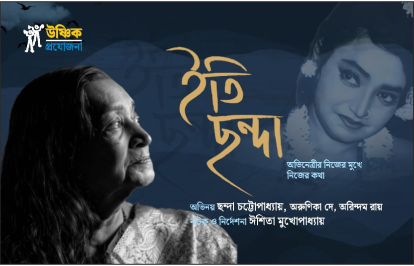
তিনি প্রবাদপ্রতিম শ্রী উৎপল দত্ত’র মানসকন্যা। বাংলা থিয়েটারের মাইলফলক- ‘টিনের তলোয়ার’ এর ‘ময়না’। তাঁর নাম জুড়ে আছে ‘ফেরারি ফৌজ’, ‘কল্লোল’, ‘তিতাস একটি নদীর নাম’ এর মতো অজস্র ঐতিহাসিক প্রযোজনার সঙ্গেও। স্বয়ং শ্রী শম্ভু মিত্র মঞ্চে তাঁকে দেখতে না পেয়ে প্রশ্ন করেন, ‘সেই মেয়েটি আসে নি’?
হ্যাঁ, সেই মেয়েটিই আসছে। ৮২ বসন্ত পেরিয়ে এসেও নাচে-গানে-অভিনয়ে অনন্ত যাঁর যৌবন। থিয়েটার, যাত্রার পাশাপাশি ছোট থেকে বড় পর্দায় অবাধ যাঁর যাতায়াত। শ্রীমতী ছন্দা চট্টোপাধ্যায়… মঞ্চে এই প্রথম নিজ ভূমিকায়। জীবন্ত এই কিংবদন্তীর মুখে শুনুন একান্ত তাঁর কথা…
Ankur presents Feluda story – “Golapi Mukta Rahasya” by Satyajit Ray
This thrilling adventure features Feluda alongside his companions, Topshe and Lalmohan Ganguly, also known as Jatayu.
The narrative revolves around a rare and valuable pink pearl, owned by the middle-class history teacher Jaychand Boral, from the Sonahati family.
Maharaja Suraj Pratap Singh of Dharampur, eager to add this pearl to his collection, proposes to Jaychand, but is met with refusal. Infuriated by this, the Maharaja involves Maganlal Meghraj to acquire the pearl by any means necessary. Feluda, with his sharp intellect and keen observational skills, is determined to unravel this mystery and thwart Maganlal Meghraj’s scheme.
Direction and Adaptation – Subhadip Chakrabarti.
Light Design and Execution – Kalyan Ghosh.
Sound Design and Programming- Nabarun Bose
Sound Execution- Krishnadeb Chakrabarti.
Cast : Feluda – Shoumo Banerjee. Topshe – Chayan Roy Jatayu – Subhadip Chakrabarti. Maganlal Meghraj – Jay Badlani.
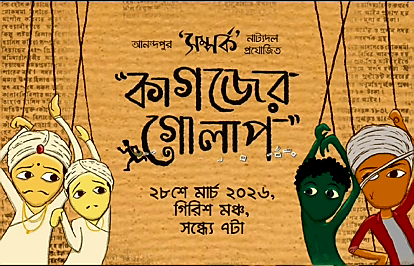
Kagojer Golap unfolds during what begins as a normal rehearsal day for students of a school. They are immersed in Rupkothar Kelenkaari, a play that exposes the subtle mechanisms of capitalism – how it creates the binary between heroes and villains and distract the masses, controls their minds, and directs their actions. Suddenly, the outside world intrudes – bombs start falling. The chaos outside mirrors the growing unease within the group, and soon, they are faced with an agonizing choice: to continue rehearsing or to abandon the art they love in favor of survival. Impending threat forces them into a philosophical and emotional dilemma – how much is art worth in such a life-threatening situation? The room fills with conflicting desires – some long to go back home while some have no place to call home. This group, this theatre, is all they have. Even if they die, they want to be surrounded by people, to protect themselves from the loneliness that surrounds them. Overwhelmed with the gravity of the moment, the most internal, almost childlike wishes come up, as everyone thinks of one last thing they want to do before they die: one dreams of dancing to Disco Dancer, another just wants to recite a poem perfectly just to prove one failed attempt cannot define them. These seemingly trivial desires become deeply human in the face of death. As they struggle to make sense of what to do, they are drawn back into the world of their play. In their rehearsal, they explore the themes of the play, which focuses on how capitalism manipulates society by creating the binary of hero versus villain. These fabricated narratives keep people distracted and docile, allowing those in power to control their thoughts, actions, and beliefs. This subversive commentary begins to mirror the very situation the group finds themselves in – unsure of what’s real and what is made up. Rupkothar Kelenkaari talks about the common mass of people, who are being controlled by capitalism. They find themselves to be similar to these people. Rupkothar Kelenkaari starts from a world we know all too well – those childhood fairy tales of kings, queens, a brave hero, and a wicked villain. We’ve been told stories where the hero’s bravery and velour is unmatched, where good triumphs over evil, and the ending is always happy. The hero wins over the princess and lives happily ever after. But this play takes that comforting narrative and provides a different perspective. Here, the hero isn’t truly heroic, and the villain isn’t simply evil. The capitalist figure, Fatkabajariya, manipulates the entire narrative, deciding who gets to be seen as a hero and who is cast as the villain. It plays with our deeply rooted beliefs, unraveling the simplistic notions we’ve carried from childhood, showing how those in power fabricate stories to control what we think and believe. How at the end of the day, everything is sellable, even our childhood stories, our simplicity, our hope of a happily ever after. At the end of the story, the capitalist ‘fatkabajariya’ was expelled from ‘Rupkotha r Desh’ (‘A country of fantasy’). As if after being expelled he has descended into this country. He is playing with the fate of people of this country now. They come to think of it, who benefits from Wars? Other than Capitalists? Is this another Fatkabajariya who is taking hold of their state now? These people relate themselves to the helpless common people who face nothing but loss and grief in the face of war, while the capitalists keep laundering money. The decision to continue the rehearsal is not an act of denial, but perhaps their only remaining defiance. Each line spoken, each movement on stage, becomes both a refuge and a rebellion. Amidst the face of destruction, there is a tender story at play. A love growing in two young hearts. Two children falling in love with each other. One of them carries a Paper Rose with him everyday, only to give it to the other. But in that particular moment, fear grips them everyday. They patiently waits for that one day, when they will overcome the fear and give the rose to the person of their dreams. But each day, each moment seems the wrong moment, so the rose remains undelivered. Then, without warning, the final bomb falls. Silence follows. Among the debris, all that remains is the lone paper rose – Kagojer Golap, leaving behind the unspoken words and the unrealized love – a symbol of all that was left unsaid, all that was left undone, a deceitful hope. The play is deeply rooted in the overwhelming emotions stirred by the struggles of children in Gaza, who are literally fighting for survival amidst a warzone. This feeling of helplessness and heartbreak haunts us, and it seeps into the art we create. It influences what stories we want to tell. Our stories become a reflection of these emotions, grappling with the questions of hope and despair.
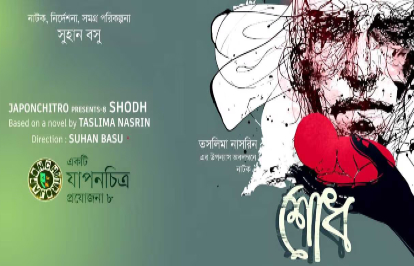
Taslima Nasrin’s novel “Shodh” explores the plight of married women and feminism
No matter how much society progresses, the divide between men and women has not yet disappeared. Even today, women have to struggle much more than men to have their voices, opinions, and thoughts respected. This reality is powerfully reflected in the renowned play “Shodh”, written by the eminent Taslima Nasrin and directed by the widely known Suhan Basu.
The play conveys the message that whether one is a woman or a man, everyone is a human being. In life and in society, everyone has equal rights. Ms. Nasrin has been into this movement since the last few decades and is trying to convince the globe through her novels & works. “Shodh” or “Revenge” is such a strong novel and research work on female psychology.
At the heart of the story is Jhumur, a young woman whose life has been a series of betrayals and silent suffering. Denied the chance to pursue her dreams and subjected to relentless domestic violence, Jhumur appears to endure in silence. But beneath that silence brews a quiet, fierce resistance. In a stunning turn of events, she chooses an unexpected path — one not of open rebellion, but of silent revenge, subtle yet deeply transformative.
This compelling narrative explores themes of resilience, identity, and the invisible strength of women in the face of oppression.
Basu’s intense direction and Taslima Nasrin’s unflinching storytelling combine to deliver a theatre experience that is haunting, thought-provoking, and ultimately liberating.
এ গল্প জন্ম জন্মান্তরের। ধর্মকে হাতিয়ার করে মালিকদের প্রতিপত্তির চেষ্টা বনাম সাধারণ মানুষদের ভিটে আঁকড়ে পড়ে থাকার জেদ। সুখের অলীক স্বপ্নে উপেক্ষিত হওয়া আর তারপর অনন্ত দুঃখকে সম্বল করে বেঁচে থাকার চেষ্টা।
আর সেই চেষ্টা চালিয়ে যাওয়া কিছু মানুষ, বাঁশির ক্ষীণ হয়ে আসা সুর, ইছামতীর ফিরে ফিরে আসা ঢেউ আর অচল অকেজো এক হলুদ ট্যাক্সি- এই নিয়ে তৈরী এক ফেলে আসা জন্মের স্মৃতির নাম ‘সওয়ার’।
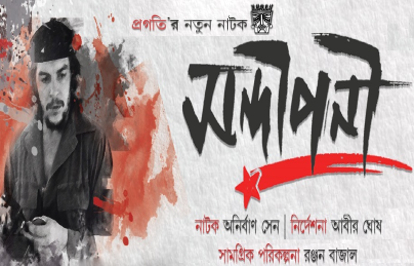
One evening, a retired professor asks his students about their political ideology, every student tells about individual political parties and the leaders they support, eventually this discussion turns to a quarrel among the students.
Professor makes them clear that he asked about political ideology and not the leader. A student mocked him ; what is ideology in his language? Who cares about it? Is there any leader who left position and power for the sake of ideology? On answer to his questions, professor narrates them the story of Che Guevara.
After his disastrous defeat in Congo, Che was hiding in Tanzania, when his wife, Aleida March came to meet him secretly. Che, father of her four children and love of so many years yet Aleida discovers a new Che, to whom the definition of happiness is only spreading Communism through out the world.
Is Che a great man or a terrorist as mentioned in the American magazines and websites? Ultimately what is the exact lesson the professor wants to teach to his students?
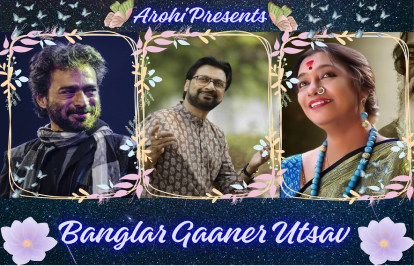
🎶 Banglar Gaaner Utsav — A Celebration of Bengal’s Musical Soul 🎶
Step into an enchanting evening that pays tribute to the rich tapestry of Bengali music! Banglar Gaaner Utsav is a grand musical gala celebrating the timeless melodies and emotional depth of Bengal’s beloved songs. This special showcase brings together some of the region’s most cherished voices — from contemporary favorites to classical exponents — in one unforgettable performance.
⭐ What to Expect:
Mesmerising renditions of iconic Bengali music
Performances by celebrated artists representing diverse musical traditions
A mix of soulful classics and evocative modern pieces
A heartfelt atmosphere filled with nostalgia and cultural pride
📅 Date & Time: 18th March | Starting at 6:00 PM
🎤 Venue: Rabindra Sadan, Kolkata
✨ Join us for an evening that honors Bengal’s musical heritage and brings its vibrant sounds alive on stage!